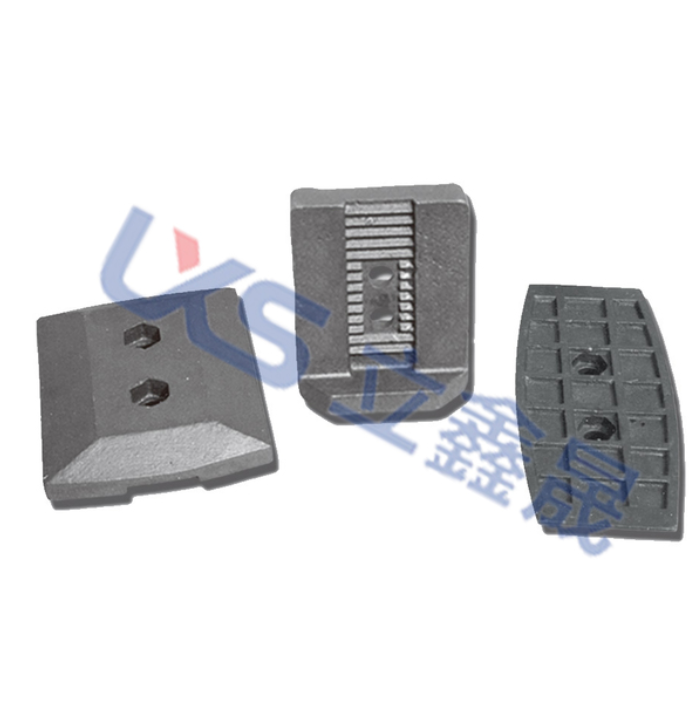
High quality casting gold products
Reference Price
$0.00
A casting is a metal-formed object obtained by various casting methods, that is, an object with certain shape, size and performance obtained by pouring molten liquid metal into the prepared mold by pouring, injection, suction or other casting methods, cooling, polishing and other subsequent processing methods.
Casting has a long history of application. In ancient times, people used castings as household utensils. In modern times, castings are mainly used as blanks for machine parts, and some precision castings can also be directly used as machine parts. Castings account for a large proportion in mechanical products. For example, in tractors, the weight of castings accounts for about 50-70% of the total weight of the machine, 40-70% in agricultural machinery, and 70-90% in machine tools and internal combustion engines. Among all kinds of castings, mechanical castings have the largest variety, the most complex shape and the largest consumption, accounting for about 60% of the total production of castings. The second is ingot mould for metallurgy, pipeline for engineering and some tools in life.
Castings are also closely related to daily life. For example, the frequently used doorknob, door lock, radiator, water supply and drainage pipe, iron pot, gas stove frame, iron, etc. are all castings.
Castings can be classified into steel castings, iron castings, copper castings, aluminum castings, magnesium castings, zinc castings, titanium castings, etc. Each type of casting can be further divided into different types according to its chemical composition or metallographic structure. For example, iron castings can be divided into gray iron castings, nodular iron castings, vermicular iron castings, malleable iron castings, alloy iron castings, etc; According to different molding methods, castings can be divided into ordinary sand castings, metal mold castings, die castings, centrifugal castings, continuous casting parts, investment castings, ceramic mold castings, electroslag remelting castings, bimetal castings, etc. Among them, ordinary sand casting is the most widely used, accounting for about 80% of the total casting output. And aluminum, magnesium, zinc and other non-ferrous metal castings are mostly die castings.
Customer Reviews
No reviews yet. Be the first to share your experience.
Please sign in to write a review.

