Rotary kiln
Reference Price
$0.00
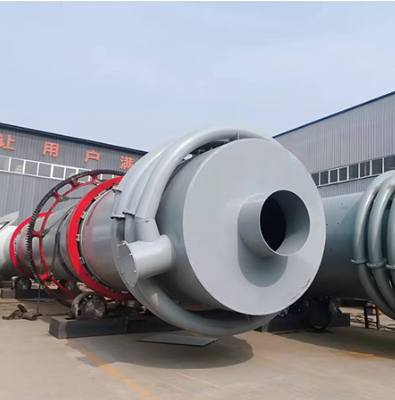
A rotary kiln refers to a rotary calcination kiln (commonly known as a rotary kiln), and belongs to the category of building materials equipment. Rotary kilns can be classified by material processing into cement kilns, metallurgical chemical kilns, and lime kilns. Cement kilns are mainly used for calcining cement clinker and are divided into two main categories: dry kilns and wet kilns. Metallurgical chemical kilns are mainly used for magnetization and roasting of iron ore in metallurgical industries, steel mills; oxidation roasting of chromium and nickel ore; Refractory materials plants roast high-alumina vanadium ore and aluminum plants roast clinker and aluminum hydroxide; Chemical plants roast minerals such as chromite sand and chromite powder. Lime kilns (i.e., activated lime kilns) are used to roast activated lime and lightly calcined dolomite for steel mills and ferroalloy plants.
Application Industries
: Rotary kilns are widely used in many production sectors such as building materials, metallurgy, chemicals, and environmental protection to perform mechanical, physical, or chemical treatment of solid materials using rotary cylindrical equipment. This type of equipment is called rotary kilns. The application of rotary kilns originated in cement production. In 1824, British cement worker J. Asp invented the intermittent earthen kiln; In 1883, Germany's Dietz invented the continuously operated multi-layer vertical kiln; In 1885, the British scientist Ransome invented the rotary kiln. After obtaining patents in Britain and the US, he put it into production, quickly gaining considerable economic benefits. The invention of rotary kilns led to rapid development of the cement industry and also promoted research into rotary kiln applications. Soon, rotary kilns were widely used in many industrial fields and became increasingly important in production, becoming core equipment for corresponding enterprises. In the application fields of rotary kilns, the cement industry has a large number of them.
Function 1. Its technical performance and operational condition largely determine the quality, output, and cost of the enterprise's products. The folk song "As long as the large kiln turns, there will be thousands" vividly describes the importance of the rotary kiln in production.
2. In the building materials industry, besides forging cement clinker, rotary kilns are also used for forging clay, limestone, and drying slag; In refractory material production, rotary kiln forging raw materials are used to stabilize dimensions and increase strength, which are then processed and formed.
3. During the ore beneficiation process, rotary kilns are used to magnetize and roast the oligmatite ore, changing the ore's original weak magnetism to strong magnetism, which facilitates magnetic separation.
4. In the chemical industry, rotary kilns are used to produce soda, forging phosphorus fertilizer, barium sulfide, and other materials. In the 1960s, American companies such as LapPle invented a new process for producing phosphoric acid using rotary kilns. This method has the advantages of low energy consumption, low electricity consumption, no need for sulfuric acid, and the ability to utilize medium and low-grade phosphate ore.
5. The entire cement production process is summarized as "two grindings and one firing," where "one burning" involves burning the ground prepared raw feed into clinker under the high temperature of a rotary kiln. Therefore, the rotary kiln is the main machine in cement production, commonly known as the "heart" of the cement factory.
6. In terms of environmental protection, developed countries around the world have been using cement kilns to incinerate hazardous waste and garbage for over 20 years. This not only reduces and renders waste harmless but also uses waste as fuel, saving coal powder and achieving resource utilization.
Classification: Classification of rotary kilns: According to appearance, kilns are divided into reducer rotary kilns and through-diameter rotary kilns. By application, they can be divided into cement rotary kilns, ceramsite sand rotary kilns, kaolin rotary kilns, lime rotary kilns, etc. According to energy supply efficiency, they are further divided into gas-fired rotary kilns, coal-fired rotary kilns, and mixed fuel rotary kilns.
1. Rotary kiln
with varying diameter: A rotary kiln with changes in diameter before and behind. Generally, the diameter changes by about 30 cm from front to back. Compared to traditional bore rotary kilns, they have the advantages of energy saving and high output, but reducer rotary kilns are more difficult to process and are even harder to process than traditional bore rotary kilns. Stricter requirements for equipment.
2. Full-diameter rotary kiln
: This is a rotary kiln with the same front and rear diameters. The commonly known type of rotary kiln was invented by Germany's Dietzsch in 1883. After more than a century of evolution, rotary kilns have become universal equipment. Compared to traditional vertical kilns, it offers better results and higher output. Processing is simple, but it consumes more energy than reducer rotary kilns.
Wet-process technology
We will introduce and analyze only the wet rotary kiln process. The wet rotary kiln body is usually relatively long (length-to-diameter ratio 30~40). To increase the kiln's heat transfer area, chains are often hung at the kiln tail to accelerate moisture evaporation. During the production of the wet rotary kiln, water is added to the raw material mill to produce a slurry with a moisture content of 30%~40%. After homogenization, the slurry meets the required requirements and is sent by the kiln head feeder into the kiln for calcination of mature material. The discharged clinker is cooled by a cooler and sent to the clinker warehouse. The raw coal is dried and ground into coal powder, then burned to supply the heat needed for the clinker calcination.
The characteristics of wet rotary kiln calcination are: since raw feed is made into slurry, it is highly adaptable to heterogeneous raw materials, raw material composition is uniform, the process is stable, the fired clinker is of high quality, the clinker strength grade is high, there is little dust during grinding, and there is little fly ash at the kiln tail. However, wet production evaporates 30%~40% of slurry moisture, consuming a large amount of heat, and energy consumption accounts for one-half~one-third of cement costs, higher than vertical kilns and dry rotary kilns. Due to high heat consumption, large energy consumption, and high water consumption during production, wet cement production has been listed as a restricted kiln type for elimination.
Process Flow
1. The ceramic particle rotary kiln equipment consists of a rotary cylinder, support device, support device with retaining wheels, kiln head, kiln tail sealing device, coal injection pipe device, and other parts.
2. The kiln body is at a certain angle horizontally, supported by a support wheel device, and has a retaining wheel device to control the kiln body's vertical movement.
3. In addition to the main drive, the transmission section is also equipped with auxiliary transmission devices to ensure the kiln can rotate slowly and prevent deformation even when the main drive power supply is interrupted. The kiln head uses a shell-cover seal, and the kiln tail is equipped with an axial contact sealing device, ensuring sealing reliability.
4. The process of calcining ultrafine kaolin at an operating temperature between (950°C~1050°C) and rotating the ceramic sand is then adjusted according to the amount of material to achieve the desired target. This calcination technology has been proven in practice to have low energy consumption, products undergo dehydration and decarbonization for whitening, and excellent performance stability.
Types and Features of Cement Vertical Kilns: There are two types of vertical kilns used: standard vertical kilns and mechanical vertical kilns.
Ordinary vertical kilns use manual feeding and manual unloading, or mechanical feeding, with manual unloading; Mechanical vertical kilns are mechanically charged and mechanically discharged. Mechanical vertical kilns operate continuously, and their output, quality, and labor productivity are all higher than those of ordinary vertical kilns. According to building materials technology policy requirements, small cement plants are using mechanized vertical kilns, gradually replacing conventional vertical kilns.
Heat Transfer Method
Flow
Conduction refers to the energy transfer caused by direct contact between parts of an object, the action of elastic waves, diffusion of atoms or molecules, and diffusion of free electrons.
Convection
Convection can only occur in liquids and gases. This phenomenon refers to energy transfer caused by relative displacement among various parts inside the rotary kiln. It must be noted that while convection occurs inside the kiln, there is also thermal conduction between the fluid parts.
Thermal Radiation
Thermal radiation is a phenomenon in which electromagnetic waves transmit energy. It not only generates energy transfer but also involves a transformation of energy form, that is, from thermal energy to radiant energy or, conversely, from radiant energy to heat energy. Therefore, the heat transfer method inside a rotary kiln is determined by the form of the material.
Main Structure
Kiln Head Section
The kiln head is the discharge section of the rotary kiln, with a diameter greater than the rotary kiln diameter. It is sealed through stainless steel fish scales and the kiln body. The main components include the maintenance port, coal injection nozzle, trolley, and observation port.
Kiln body section
: This is the main body of the rotary kiln (rotary kiln), usually 30~150 meters long, cylindrical in shape, with 3~5 rollers in the middle. The cylinder is mostly processed by factories into 3~10 segments, then welded after being transported by large trucks to the destination. The ring section, commonly known as the ring (ring of steel), is cast from molten steel. Due to its load-bearing capacity, the kiln body is slightly thicker than the steel plates of the other parts. The supporting tugwheel is also part of the kiln body and the rollerConnected to the foundation, it serves as the load-bearing pillar for the entire rotary kiln. Typically, a set of idlers consists of two idlers and two retainers. During normal operation, refractory bricks must be laid inside the rotary kiln.
Kiln tail section
: The kiln tail section is also an important part of the rotary kiln. At the feeding end, it resembles a lid of a rotary kiln and mainly serves as the feeding and sealing function.
Rotary kiln support frame
1. The support frame of the rotary kiln makes our rotary kiln equipment more robust, preventing shaking during operation and ensuring stable production;
2. The support frame of the rotary kiln mainly secures our rotary kiln equipment. During use, it prevents deformation of the rotary kiln equipment. As everyone knows, improper operation can cause deformation of the rotary kiln equipment, so it serves this purpose.
3. The rotary kiln support facilitates the lifting of rotary kiln equipment and facilitates transportation.
A preheater tower
, also known as a preheater, is a device that uses the waste heat from the exhaust gas discharged from the rotary kiln before the material enters the rotary kiln to preliminarily heat the material. It is mostly a vertical structure. Its principle is to transfer the waste heat discharged from the rotary kiln tail through a preheating tower filled with raw materials to achieve the raw material heating process. Combined with preheating towers, energy consumption can be effectively reduced, and the finished product quality grade improved.
Cooler
: Unlike a preheater, a cooler is a device that rapidly cools the material after firing in a rotary kiln. It looks like a small rotary kiln but with a smaller diameter and shorter diameter, does not require refractory bricks, and is replaced by a lifting plate inside. Its main function is to rapidly cool the finished product.
Conveyor Belt
: The conveyor belt is the material conveying device in the rotary kiln. During use, various forms of damage often occur, such as edge delamination, rot, defects, and cracking; Longitudinal tears, deep cuts, holes, large-area wear, rubber bulging or peeling, internal defects in joints, etc. Longitudinal tearing is urgent, edge damage is common, and internal defects in joints are hard to avoid, so the service life after repair is a concern.
Traditional high-temperature hot vulcanization processes are ineffective at repairing longitudinal tears, edge ulceration, and edge defects, and the rotary kiln is heavy and labor-intensive. New materials are often used to solve conveyor belt damage, such as Kaister 90T high-curing rubber repair paste or Fusohn rubber repair materials. 90T has excellent adhesion, adheres to all rubbers; Outstanding elasticity, with a stretch of up to 300%; Outstanding wear resistance, surpassing that of thermosetting synthetic rubber; Good spill resistance, can be applied vertically or on top of the head to a thickness of 1 inch without smudging; 100% solid means it does not shrink, offering excellent chemical corrosion resistance and resistance to many types of chemical corrosion. Fusone is a new type of synthetic rubber product that can easily and quickly repair conveyor belts, offering excellent wear resistance, impact resistance, and long-lasting durability, equivalent to extending the belt's service life.
Customer Reviews
No reviews yet. Be the first to share your experience.
Please sign in to write a review.